I’ve had lots of people asking me how to combine gardening, play and relaxation spaces in small family gardens like ours, so I thought I’d give you a tour and share some tips.
We have a truly tiny garden, in a Victorian terraced house on the edge of a city in the UK. It has no lawn, is surrounded by a brick wall but we still manage to grow (are you ready for this…) apples, basil, bay, beetroot, borlotti beans, broad beans, chives, cress, cucumber, courgette, fennel, garlic, green beans, lavender, leek, lettuce, nasturtiums, onions, oregano, parsley, peas, pears, peppers, potatoes, raspberries, radish, rocket, sage, spinach, spring onions, strawberries, sunflowers, thyme, tomatoes as well as a variety of pretty flowers and shrubs. We also have areas for play and space for the adults to sit and relax or eat outside.
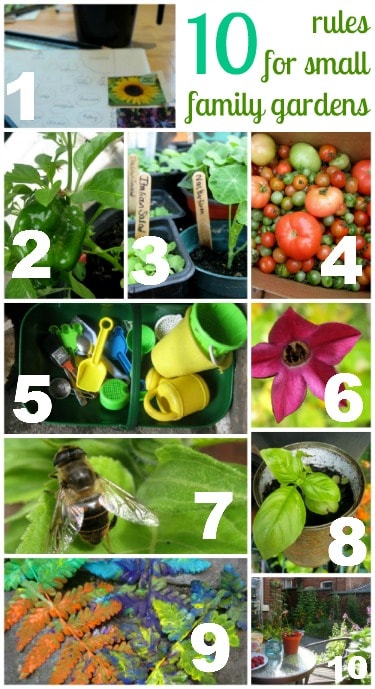
Welcome to our garden, come and take a look around.

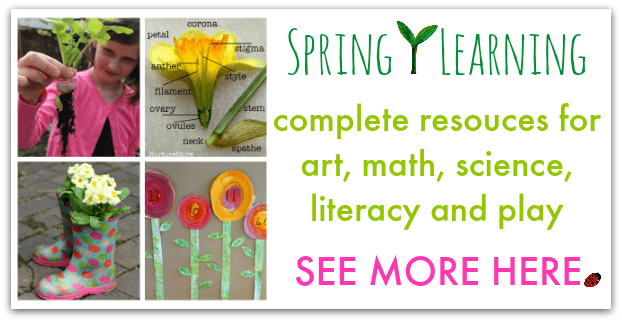
Join my Seasons School Spring Workshop for a complete programme of spring learning: all organised for you, guided by me, for hands-on, real-world experiences – the best way to learn!
>>>> Get the complete Spring Resources here.
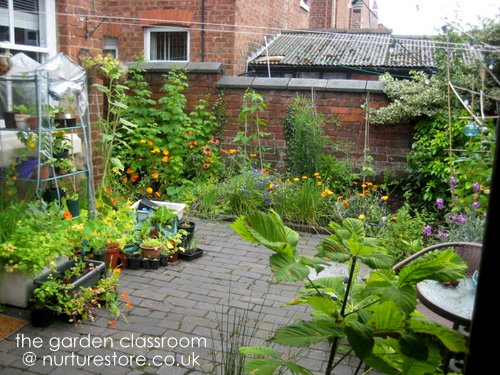
Here are my 10 rules to maximise what you have to turn your small family garden into a great place to enjoy.
Rule 1: Plan
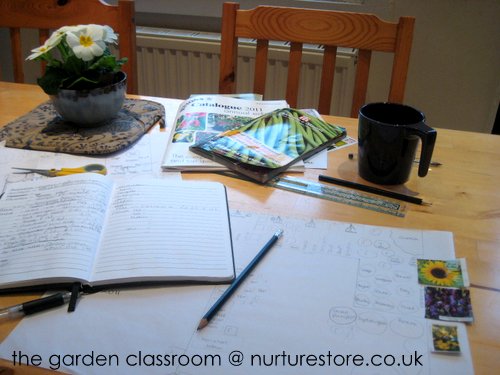
Draw up a wish list of everything you’d love to have in your garden, including ideas the children have. Then take a look at the space you have and see what’s possible. In a small family garden every centimetre counts, so set your priorities and organise them into your space. Every year I draw out a roughly-to-scale plan of our garden and work out what we will grow where – nothing fancy, just a basic template. This helps me be clever about doubling up our use of space – so for example the girls play-house will be the framework that our peas and beans grown up, the shed door is painted with blackboard paint to become a chalk board, the mini-greenhouse where we start all our veggies off houses the tomatoes once the veg has been planted out in the garden.
Rule 2: Be ambitious
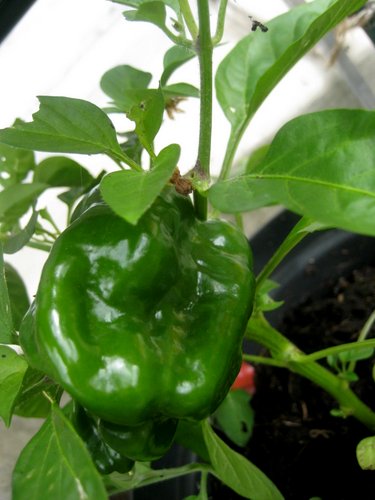
Practise abundance! Don’t think small, think possibilities! Do you think it’s possible to grow 34 different types of food in the garden of a terraced house? Until I wrote this list I didn’t realise quite how much we do manage to fit in. I want my children to have the experience of seeing how lots of things grow and trying lots of home-grown foods, so we focus on variety rather than quantity. We might only get two or three bowl’s full of strawberries but what a treat after you have waited for days for them to turn from green to red. We also always throw in a wild card each year, something we have never grown before, because it’s good to keep trying something new. This year we’re growing peppers for the first time.
Rule 3: Grow your own
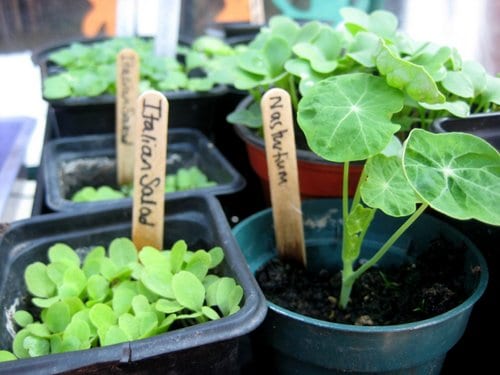
Children gain so much from seeing how a seed develops into a mature plant that I would encourage everyone to grow something from seed. Sunflowers, peas, beans and lettuce are good ones to choose as they are reliable, quick to germinate and grow fast – giving the kids lots to observe. (You can find several growing experiments to try in The Garden Classroom book.) You don’t need to give over whole areas of space as lots of foods grow well in pots and growbags. We grow herbs, lettuce and radishes in pots and potatoes in a dustbin (just make sure they have drainage holes in the bottom). And we chose small varieties of some plants, such as ballerina apple and pear trees, to suit our space.
Rule 4: Grow something to eat
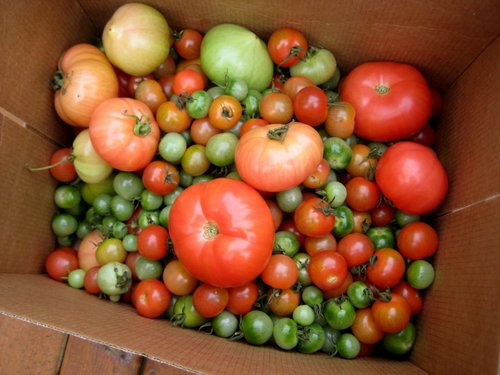
I find my children are more adventurous and thoughtful about eating healthily because they are experienced at growing it at home. We like to grow some plants that the children can help themselves to, whenever they want a fresh snack: sugar snap peas, cherry tomatoes, strawberries and raspberries.
Rule 5: Welcome wildlife
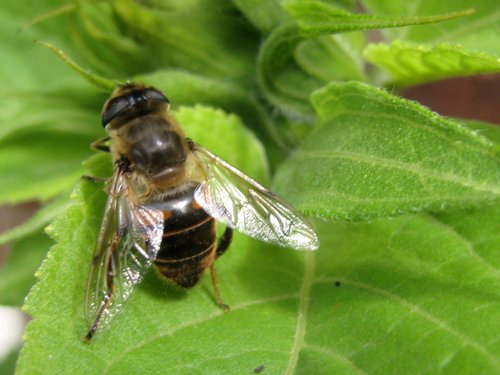
Welcoming wildlife into your garden is good for the environment, for your fruit and vegetables which need pollinators and predators to eat bugs, and for children who get great science lessons from observing them and how they live. We double up flowers that are pretty but are also bees’ and butterflies’ favourites (nasturtium, sunflowers, calendula and cornflowers). And we have a bird cafe (which the book shows you how to make).
Rule 6: Appeal to all the senses
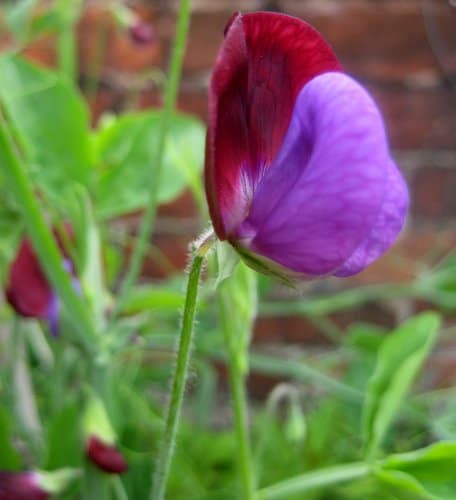
Make your small family garden work on lots of levels, with pretty flowers to look at and smell, leaves and wind chimes to hear, different textured leaves to touch and a variety of foods to taste.
Rule 7: Include interesting areas for creative play
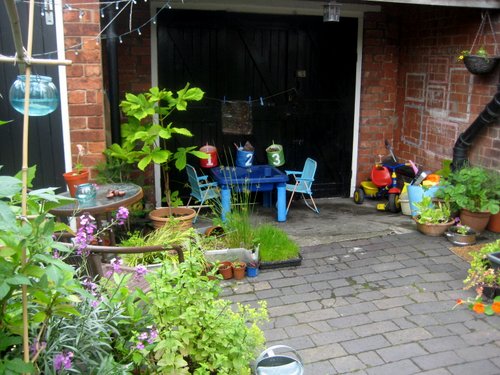
We have three main play areas in our garden. Our sand and water table is a place for lots of sensory play, with loose parts including pebbles, shells, fir cones and sticks available for creative play. We also have our imaginary lands made up of our fairy garden, dinosaur land and miniature meadow. (You can find out how to make all three of these in the ebook) And we have our Pixie Palace which is a frame made of bamboo canes bound together with string, which is just big enough for the girls to fit in together. The walls of the Pixie Palace are where we grow our peas and beans.
Rule 8: Be creative with art
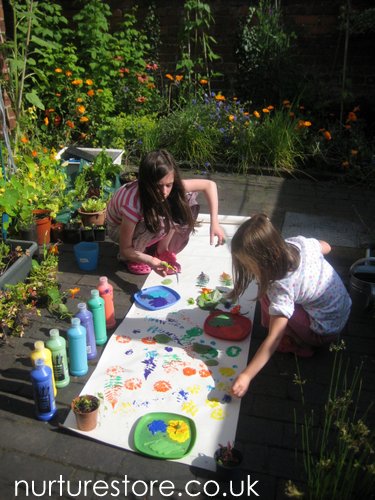
The outdoor space gives you the opportunity to go bigger with your art and to be a little messier. I’ll show you how we use the yard floor for big art experiments next week. I’ve painted our shed door in blackboard paint to create an ever changing easel, and we use chalks all over the garden in lots of ways. An extra clothesline along a wall is a great way to hang art to dry and for display, without taking up any extra space. You can find lots of of art projects in the book.
Rule 9: Practice eco-gardening
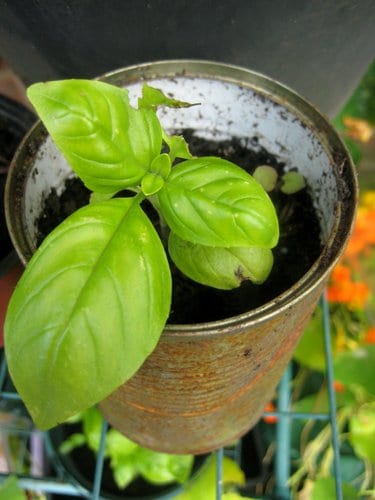
There are lots of ways to practice eco-friendly gardening, even in a small space. We sadly don’t have room for a compost heap or a rain water butt (though we do have both of those at the School Gardening Club I run) but we do use our left-over coffee grinds as soil improver. We leave one corner of the garden, under the shrubs in the corner, as the wildlife zone, with lots of leaves and bark left for mini beast homes. And we re-use tin cans and up-cycle colanders and Wellington boots as planters. As everything is all together we make sure our garden is organic, so the children are safe to play and eat.
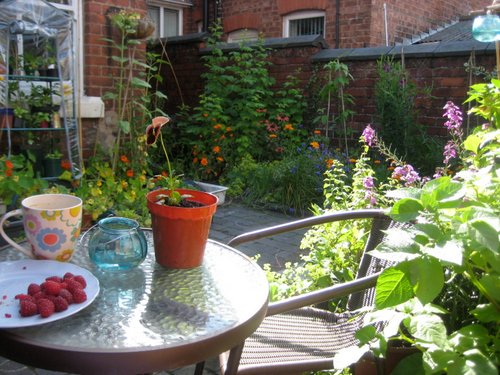
Rule 10: Make mum a spot
Last but not least, among all the thought you give to children, plants and wildlife, make sure to leave some space for you. A little table and chairs are just the spot for my morning coffee, and my favourite place to sit awhile after the girls have gone to bed.
Creative ways to use nature to inspire learning
Access a full curriculum of spring learning in my Seasons School Spring Workshop here.
Wow you have a beautiful garden, you are inspiring me to do more in our small space.
Thanks Ali. I always enjoy your garden ideas – would love to see even more!
So inspiring! Want to come plan our garden for us? ;-p (Oh, and I love that you alphabetized your growing list! Totally something I would do! haha!)
Yes, do you like that ABC Jane? I feel like I should adapt my planting for next year to get a full A-Z!
What a beautiful garden! I love what you’ve done and the chalkboard paint on your shed door is such a wonderful idea. I am a wanna be gardener, I love the idea but I’m so rarely successful. Maybe it’s time to try again.
I told you our outdoor spaces were very different Mud Hut Mama! I bet you could grow some amazing plants where you are.
I love the idea of have all the senses involved in the garden. Your mum spot sounds lovely.
JDaniel4’s Mom, it’s my favourite spot in my whole home 🙂
I love this post! We have a garden and I am excited to try some of your tips out this year & years to come! thanks
I love your garden. You have so much going on there, yet it still seems so peaceful, relaxing and inviting! I have yet to have gardening success. We don’t have space so we have to keep it really small and I can never transfer things – that’s where it usually goes bad, which is disheartening because the girls have watched things grow and sprout only to have them die. 🙁 I would love a space like this – so much possibility! I enjoyed seeing all the photos and reading about all the secret spots for your girls. Awesome!
I am truly impressed. We probably have a garden 4x as big and I cant imagine myself growing all those things. I’ve never done it before so its quite intimidating and maybe I’m too lazy as well
I am a small girl and I thought that next month I grow crops and full in joy with nature so so and so amezzzzing idea
Shivali