Have some fun with bean bags!
We have four colours of bean bags so we chose four coloured chalks to match. We drew four different shapes and numbered them 1 to 4. Then it was time to play.
Have a go at colour matching – can you throw the blue bean bag into the blue shape?
Have a go with numbers - can you throw a bean bag onto the number 1? onto the number 2?

Have a go with shapes - can you throw all the bean bags into the circle?

With older children you can let them throw at the targets and add up the scores as you go along.
Have some fun with your maths!
Happily shared with

Works For Me Wednesday and…

I love the way these tissue paper suncatchers look so vibrant in the sunshine. They’re very easy to make and even toddlers can make their own masterpiece. You’ll need a laminator to make this version, which you can buy: Cathedral A4 Laminator with Jam Release
or your local print shops may offer the service. Alternatively you could use sticky-backed plastic to hold the tissue paper in place.

Choose your favourite colours and create your design on the laminator pouch

Put your finished design through the laminator

You might like a Matisse inspired square design

Or you can add texture by scrunching the tissue paper

A heart shape would make a lovely present.
To make the heart shaped suncatcher, we arranged the tissue paper in the heart design on the pouch and then cut round the outline after it had been through the laminator machine.
Ever inventive, the girls have taken the suncatchers and turned them into stained glass windows in their story tent.
And if you’re enjoying creating with tissue paper, you might also like this flower craft.
Kelly over at A Place of My Own is hosting a British Mummy Bloggers carnival this week and has challenged everyone to write a post inspired by a song title. Here is our entry:
Bubble Painting to the tune of I’m Forever Blowing Bubbles (I’m listening as I type!)
(Hazard warning: you need to make sure your child understands the concept of blowing not sucking through the straw)
We started our musical odyssey by getting our materials ready: some white paper, a plastic tray (big enough to hold our paper), paint, washing up liquid, drinking straws, water

We filled our tray with some water, paint and washing up liquid so it was about 1cm deep and mixed it all up. We made up two different trays so we could use two colours.

Then, using the drinking straw, we started blowing our bubbles. This bit was great fun!

We gently put a sheet of paper over the bubbles to make a print of them. Don’t press down too hard or leave in for too long or you will end up with soggy paper and the bubble print will be lost.

We let the first colour dry (didn’t take very long) and then re-dipped in the other tray to produce our final picture.

Have you tried bubble painting with your kids?


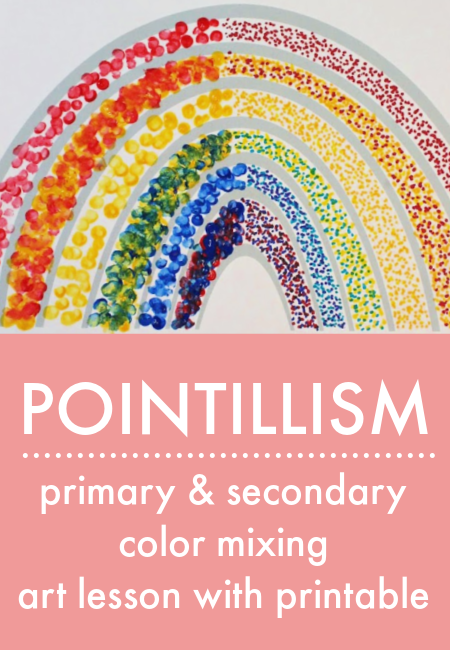
Wednesday 17th March is St. Patrick’s Day when we will all be wishing we could find a pot of gold left by a little Leprechaun at the end of a rainbow. Failling that, how about some finger painting to make your very own rainbow?

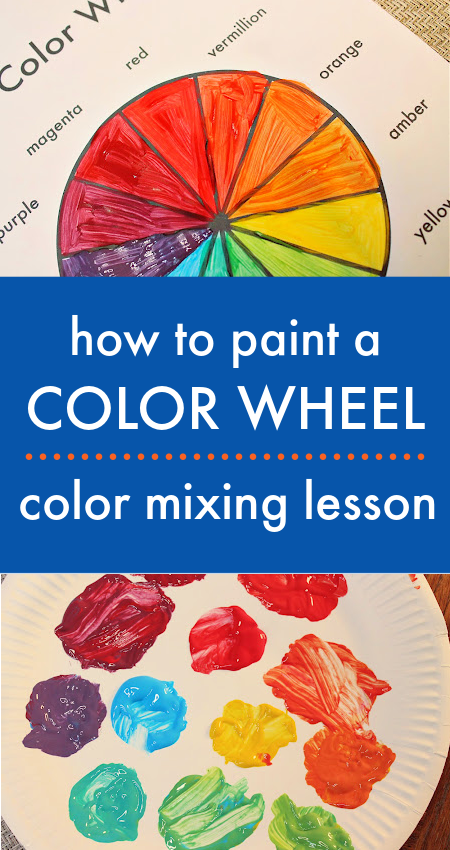
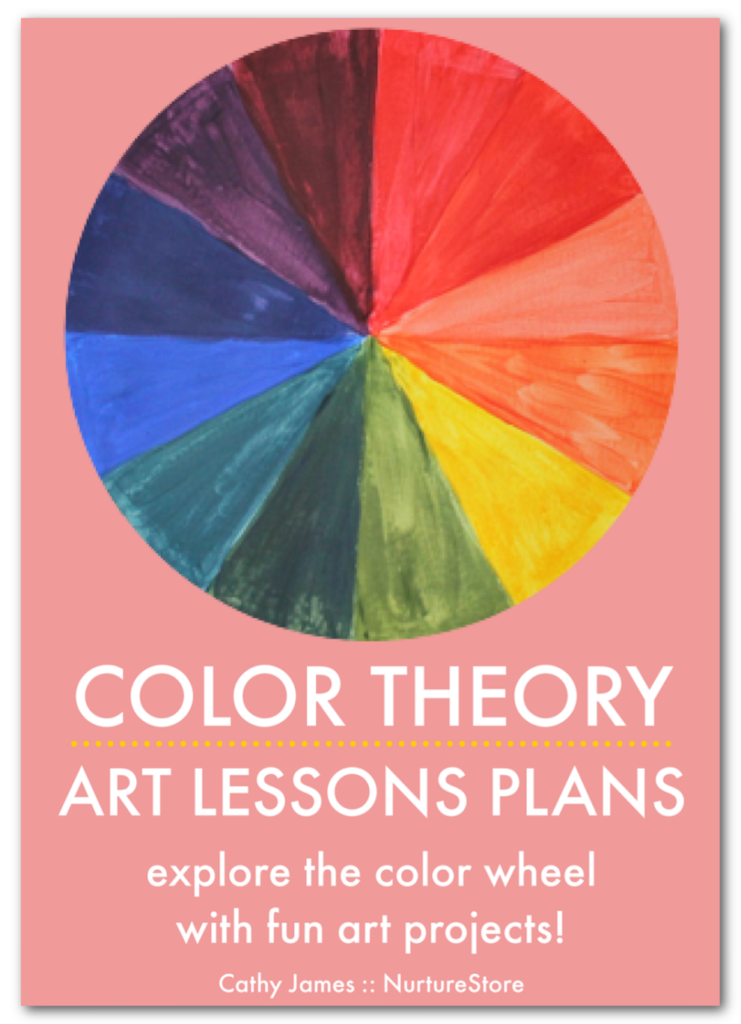
We started by mixing up some colours – which the girls thought was magic! I’m sure you know red and yellow make orange, blue and red make purple and yellow and blue make green but they didn’t and they were impressed with Mummy’s alchemy!

The first technique we tried was to put a blob of paint onto each finger to make a rainbow with one swipe of the hand. You’ll need to help your child work out which finger needs to go in which colour of paint for this.

With the fingers held close together you can then make a rainbow arc on your paper. This worked well for Big (who is 7) but Little (who is 3) found it hard to hold her fingers in the right way to create a rainbow, and besides the paint was for too tempting to only put your finger in once!

So she used just her index finger, taking one colour at a time, to make her rainbow.

Add a black pot and some gold finger-fingerpainting coins and you have a great card to celebrate St. Partick’s Day.
And you might also like this idea to put a rainbow in your tummy!

a rainbow on your plate
Beannachtaí na Féile Pádraig oraibh!
Happily shared with Today’s Creative Blog.

Messy play is a wonderful way for children to explore their senses and there are lots of materials you can use. With younger children you must always be aware of course that whatever they are playing with is guaranteed to end up in their mouths – so shaving foam or playdough is no good for the littlies. Children explore so much with their mouths that there’s no point trying to stop them, but instead you can provide a material that it’s safe for them to use. So what better than some jelly!

You can easily get hold of jelly which is made with natural food colouring. With babies you can start with just one colour. I usually pop on a cover-all bib and sit them in their highchair at the table. I put a mound of jelly on the highchair’s tray and then let them go for it. Watch them poke, squish and taste. Chat to them while they play and give them new words to try like wobble and squash. You could sing ‘Jelly on a Plate’ while you play.
With toddlers and pre-schoolers you can use 2 or 3 different colours of jelly and see what happens when you mix them together. This is a fun first lesson in colour combining, as you watch red and yellow jelly turn into orange. Let the children help you prepare the jelly so they can observe how it changes from solid to liquid and back to solid again.
Sometimes children can be reluctant to try new sensory experiences and may not want to touch the jelly. To overcome this and encourage them to experiment you could have a jelly lucky dip by hiding a few tempting treasures at the botton of a bowl of jelly for them to fish out.
You can also add props such as pans, plates and spoons to role play a kitchen or cafe. Spooning the jelly out onto plates is good hand-eye co-ordination practice.

This post is happily shared with weareTHATfamily in the Works For Me Wednesday carnival.

These two ideas wrap up our week of trains, trains and more trains.
Idea One is to make a Sorting Train.

I’ve seen lots of lovely train sets available in shops but my daughter specifically wanted one which had open carriages so she could take her toys for a ride, so we made our own. We used plastic box containers from the recycling bin for the carriages and attached them together with string – very simple, but just what she wanted. She loaded the train with her toy passengers and played with the train in this way for a while. We have open shelving in the playroom to encourage the children to be creative and grab their own props when they’re playing, and today the wooden blocks were chosen. I asked my daughter if she could sort the blocks into the carriages by colour – which you can see she did. This classification ability – being able to sort objects into groups, be it by colour, size, purpose – is actually a pre-reading skill. It encourages logical thinking and helps to develop visual discrimination skills. Being able to look at a selection of objects and sort them is a step on the way to looking at a selection of letters and words and being able to read them. Of course, she was just having fun! Once the train was loaded she delivered the different coloured blocks to stations around the room.
We used the wooden blocks again for Idea Two. My daughter enjoyed using felt shapes to make a train picture yesterday, so I thought I’d make her a ‘matching puzzle‘ using our wooden blocks. On a piece of paper I lay out some blocks to make a train shape and drew round them. Then I coloured them in colours that matched our blocks.

Then I asked my daughter if she could use the tub of blocks to find the right ones to go on top of the paper picture to make a block train.

To do this she had to use lots of maths and pre-reading skills as she had to think about:
- their shape – rectangle or square?
- their size – big rectangle or small rectangle?
- their colour – red semi circle or yellow semi circle?
- their orientation – arch pointing left or right?
You could adapt this puzzle game to the shape of blocks you have and what your child likes. You might make a house picture, a face or even a random pattern. If your child enjoys jigsaws, whiy not give this a try?

a rainbow on your plate
We often use paint or crayons when we’re teaching children about colour – but why not use food? Challenge your child to see if they can make a rainbow on a plate.
Can they think of a food for each colour in the rainbow? You could go on an treasure hunt to the market or grocers to see what you can find. This is a fun way to introduce new foods to cautious eaters and might encourage picky eaters to try something for the first time.
We used fruit this time, but our next competition will be to find a blue vegetable – any suggestions?
A colour tree for inside or outside looks beautiful and helps children learn their colours.
You will need:
A base circle of card ( we used a paper plate) for each colour you want on your tree
Lots of collage materials – different shades of each colour
Glue
Sticky back plastic (the sort used to cover books) or a laminating machine -if you’re making an outside tree
Hole punch
String or wool
We coloured both sides of a paper plate with red wax crayon and then covered it with all different shades of red collage materials.
We then repeated this to get a blue plate , yellow plate and so on. We put each plate through a laminating machine to weather proof it – or you could coat each side in sticky back plastic. Use a hole punch on each plate to make a hole, thread through the wool/ string and then tie your plate up on your tree. We used a bird feeder, but you could use a real tree in the garden or some large twigs in a vase inside. Stand back and admire!