By Cathy James on December 13th, 2012% 
When I think back to the ways I learnt how to spell as a child, there was no fun or creative play involved. We got list of ten words every week, we copied them, we copied them, we copied them again, and then we had a test on a Friday to see how well we could remember them. We also had to put our hands up to show the whole class our scores, so if you hadn’t remembered that many it was pretty miserable.
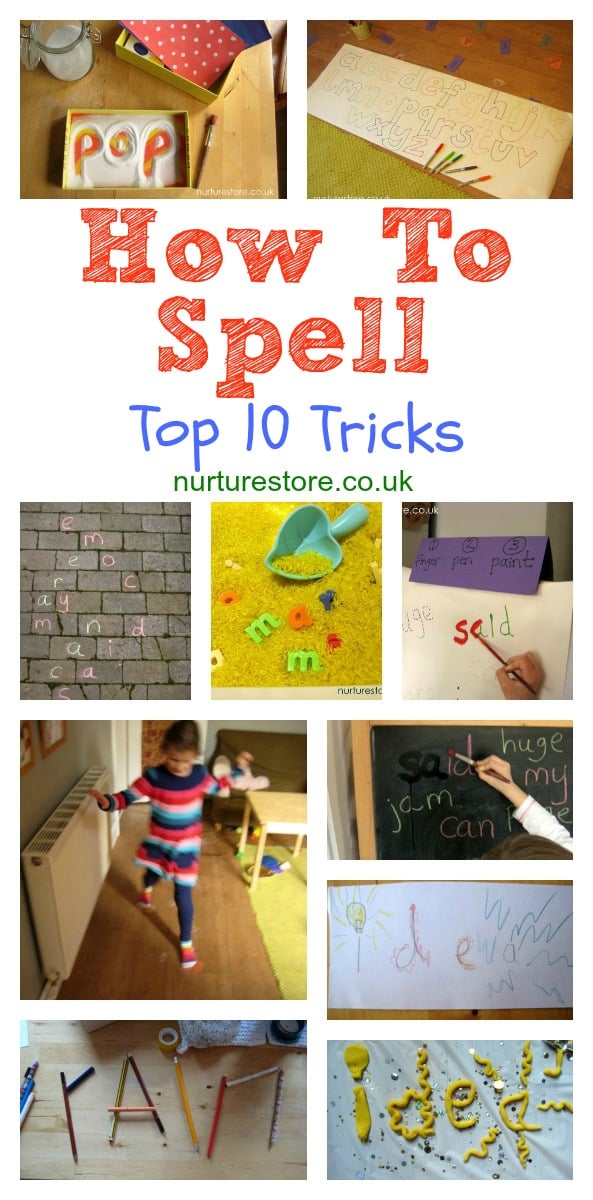
But learning how to spell doesn’t have to be like that. Here are ten ways we learn spellings in our house – with lots of creativity and fun and jumping around involved.
There are lots of different ways that children learn and these spelling activities cover a range of preferred learning styles: visual/spacial, auditory, kinesthetic… If your child has a very strong learning preference trying out these ideas might help you discover a way that’s just right for them (it’s helped enormously in our house). In any case, all children can benefit from learning through a variety of ways, using all their senses, mixing things up a little so it doesn’t get boring, and maybe even enjoying learning how to spell.
The activities may take a few minutes longer to set up then just grabbing a pencil and paper but we’ve found they are a whole lot more fun – and effective – than just copying out the words.
How to spell: top 10 tricks Read more »
By Cathy James on August 1st, 2011% 
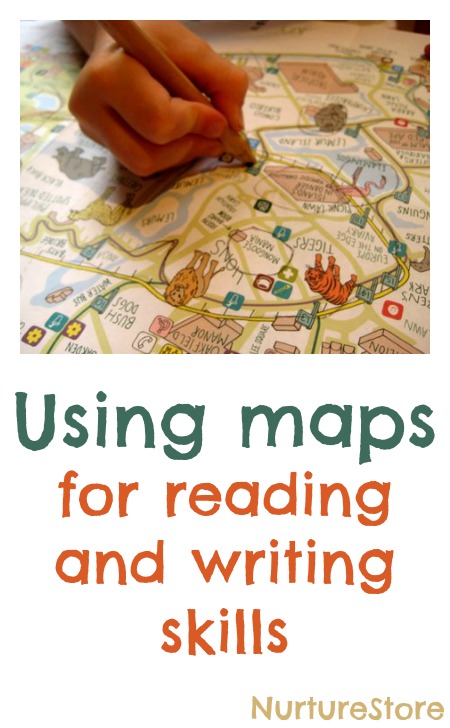
If you’re out and about this summer grab a map and add some literacy lessons.
1. Giving a map to the children and following your route as you go is a great lesson in geography. Look out for landmarks, talk about left and right and the points of the compass. What words can they spot on the map to match up with what they see on their journey? Read more »
By Cathy James on May 24th, 2011%

Transform an ordinary jigsaw into a special puzzle just for your baby with this idea for a hide and seek personalised jigsaw puzzle featuring some of your baby’s favourite people.
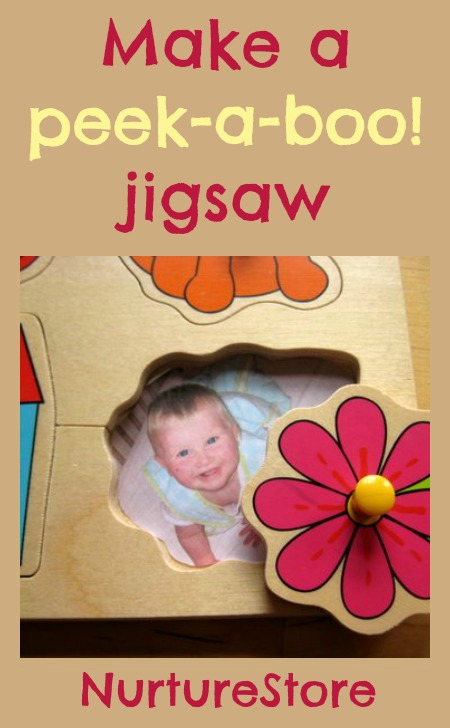
Wooden jigsaw puzzles are great for babies:
- They help your baby develop their pincer grip as they pull out the pieces using the peg handles
- They develop fine motor skills and hand-eye co-ordination as your baby turns the pieces around and passes them from one hand to the other
- They’re good for learning about size and shape and orientation
- They give you and your baby lots to chat about as you look at the pictures
To make a jigsaw even more fun try this idea for a personalised jigsaw for your baby:
1. Choose a jigsaw puzzle with large pieces and peg handles.
2. Print out some photographs of your baby’s favourite people.
3. Match up each piece of the puzzle with one of your photographs and use the puzzle piece as a template to cut your photographs to the right size.
4. Glue each photograph into one of the holes in the puzzle and you’re ready to play hide and seek.
Our SUPERbaby play series focuses on simple, playful ideas you can use with the youngest of children to have fun and encourage them to develop important early learning skills.
The emphasis is on ideas you can easily fit into a busy week, using materials you’ll have around your home. View all our SUPERbaby ideas here.
By Cathy James on March 24th, 2011% 
This maths game combines crafting, turn taking and a bit of science as well as the chance to work on counting and number ordering. It’s easy to create the materials for the game and you can adapt it to suit whichever set of numbers you’re working on – or make a set with letters if you want to practise the alphabet.
You’ll need to start by making a set of fish.
1. Cut out some fish shapes from some coloured card and let the children decorate them. Leave a space on each one to add a number.
2. Fill in the numbers on each fish. We start out with numbers 1-10 but you can add more, or perhaps use 10, 20, 30… depending on which number sequence you’d like to play with.
3. To make a magnetic version you can add a metal paperclip near the mouth of each fish. You can then use a magnetic fishing rod (which you can make by trying a magnet to a piece of string) to go fishing for your number letters.
How to play:
- Place the fish, number side up, on the floor, in a hoop or in a bucket. Or make an undersea landscape picture for them to swin in.
- The easiest version of the game is to practise your hand-eye co-ordination and just let the children go fish. See if they can recognise the numbers on each fish they catch. Encourage the children to co-operate and take turns with the fishing rod.
- You can aim to catch the fish in ascending or descending number order, or just see which ones they catch and arrange them into a sequence once they’ve all been caught.
- Tell the children you had ten fish when you started and, as they catch the fish, ask them if they can work out how many more must be left in the pond.
- You can try some sums too. Pick a number, say 3, and then catch a fish. Can you add the number on the fish to your starting number of 3? (you might like to use a number line to help work this out). Or have the children catch two fish and see if they can add their numbers together.
- If you have an older sibling playing along they can practise their number bonds. If they catch a 3, what number do they need to add to get to ten? They could work on times tables too.
As an alternative, you can make version of the fish with letters instead of numbers. When they catch a fish you can see if the children can say the sound of the letter they have. Can they think of something that starts with that letter? Can they find something in the room that starts with the letter?
We like to use this game to make numbers (and letters) fun and have the children approach learning them in a playful way. How do you add numbers to your play?
happily shared with Math Monday and Made By Little Hands and Tot School and For the Kids Friday, Preschool Corner and Frugal Friday

|
11,202 families already receive our Play Planner!
|